
CP1–CP9 pallets: same size does not mean the same design
Compare chemical pallet footprints, including CP3, CP8 and CP9 at 1140 × 1140 mm, and learn why the exact CP construction matters.
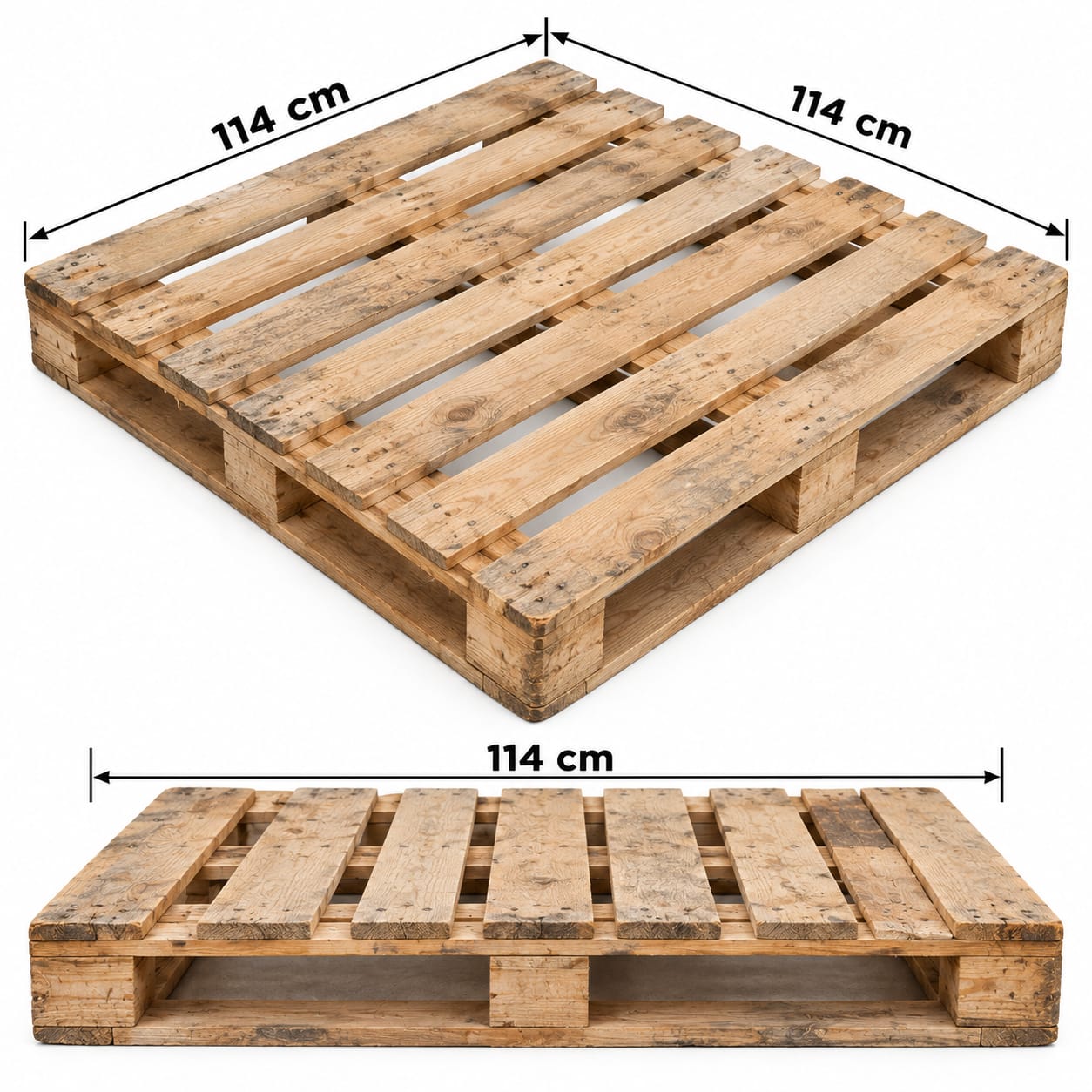
What CP means
CP identifies a family of chemical-industry pallet designs. Each type has its own construction requirements. Ordering only by length and width can miss essential differences in the bottom deck, fork access and support layout.
CP1 to CP5 footprints
EPAL lists CP1 as 1000 × 1200 mm, CP2 as 800 × 1200 mm, CP3 as 1140 × 1140 mm, CP4 as 1100 × 1300 mm and CP5 as 760 × 1140 mm. Keep the specified orientation when communicating an exact CP requirement.
CP6 to CP9 footprints
CP6 is 1200 × 1000 mm; CP7 is 1300 × 1100 mm; CP8 and CP9 are both 1140 × 1140 mm. CP3, CP8 and CP9 share a footprint but are distinct designs. They should not be substituted on footprint alone.
Bulk bags, sacks and chemical loads
Confirm the consignee's exact CP type, bag or drum arrangement, restraints and handling method. Bulk-bag discharge applications may require a specific opening and base design. The SHAYAY designer produces a generic wooden layout; a CP footprint selection is not a certified CP drawing.
Condition and export treatment
Choose new or an inspected used grade separately from the CP type. Ask for the required treatment and authorised ISPM 15 mark when applicable. Neither a CP name nor a treatment mark is a general guarantee of load capacity.