
Wooden vs plastic pallets: choosing for your UAE business
Compare wooden and plastic pallets for warehouses, packaged food, export and closed-loop operations without confusing material with load capacity.
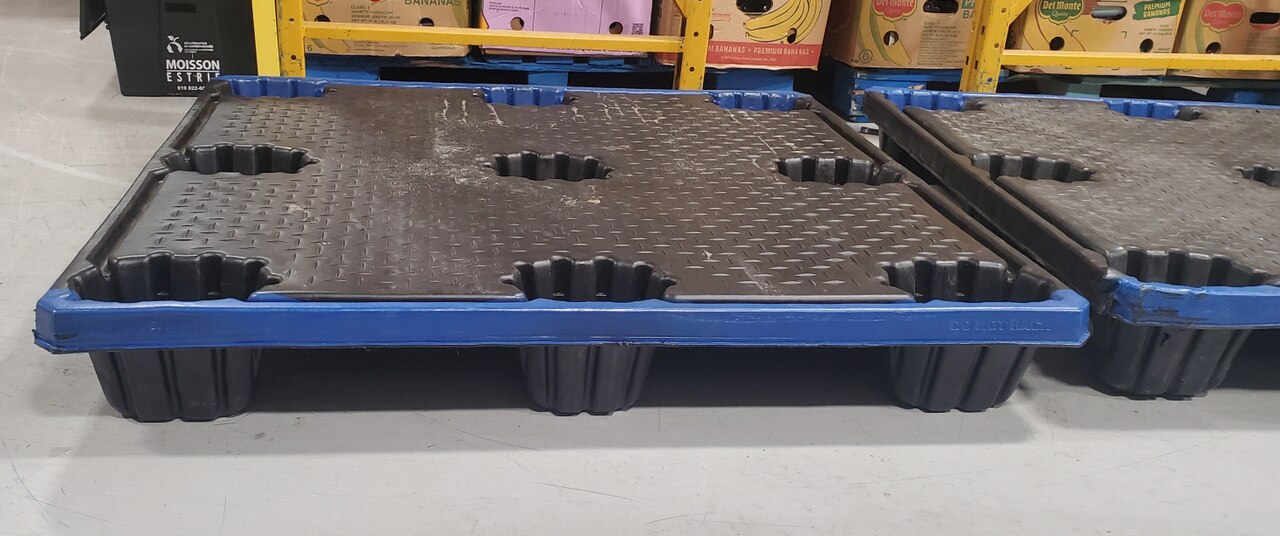
Start with your goods and handling equipment
There is no single material that is best for every warehouse. Start with the loaded footprint, load distribution, forklift access, rack requirements, cleaning routine and the receiving customer's specification. Neither material alone guarantees a load rating.
When wooden pallets fit
Wooden pallets can suit dry packaged goods, industrial logistics and custom footprints. Their boards and supports can be configured for the load, and suitable damaged components can be repaired by a qualified supplier. New and used condition must be inspected separately.
Used pallet grades describe condition and construction, not independently certified capacity. A clean once-used pallet should show handling marks without rot, broken boards or protruding nails.
When plastic pallets fit
Plastic pallets can suit repeated return journeys and washdown processes where the exact design is accepted by the operator. Check surface grip, drainage, temperature limits, chemical compatibility and rack reinforcement. An open-grid plastic pallet and a closed-deck hygienic pallet are not the same product.
Export requirements are separate
ISPM 15 regulates solid-wood packaging used in international trade, including treatment and authorised marking. Plastic is outside this wood-packaging standard, but importing-country and customer requirements still apply. Do not assume a wooden pallet is compliant just because it is new.